Robot Vacuums
Products · Robot Vacuums
1 active deal
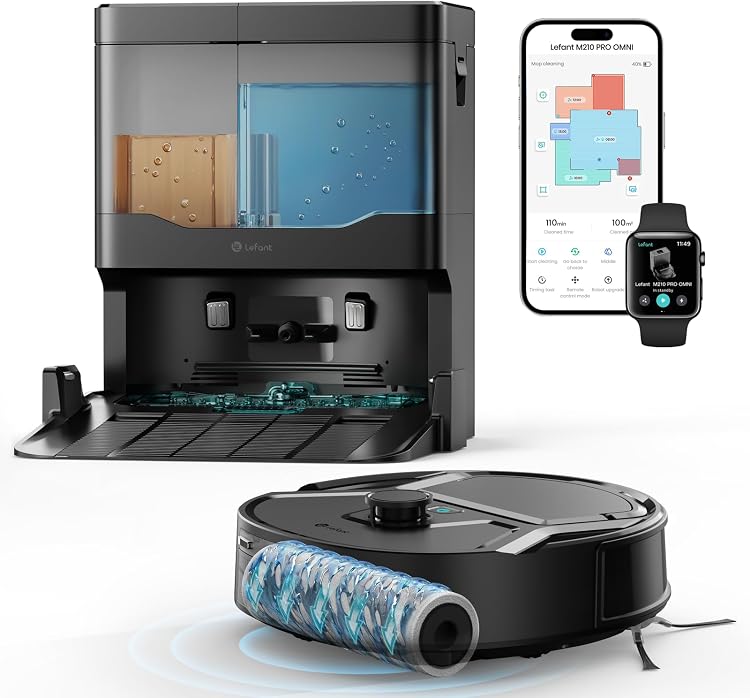
Robot vacuums: compare navigation, obstacles and dock maintenance
Choose a robot for the floor area it can actually reach. Measure clearances under furniture, thresholds and the space around the dock. A robot cannot climb stairs, and advertised suction does not establish how well it navigates your home.
Decide whether you need vacuuming, mopping or both. Mapping, object avoidance and mop handling are separate features. A self-emptying or washing dock reduces certain tasks but introduces its own bags, tanks and cleaning routine.
Routes and obstacle handling
Check room mapping, no-go zones and behavior when moved between floors. A mapped route does not imply reliable recognition of cables, toys or pet accidents. Results depend on objects and conditions. Prepare the area as instructed and consider how the robot returns to its dock, rather than assuming it can operate around every household obstacle.
Carpet and mopping behavior
Confirm whether the robot avoids carpets, lifts its mop or leaves mopping parts at the dock. A small lift may not clear thick pile. Check wet-cleaning suitability for your floor finish. Dragging a damp pad, vibrating and rotating pads perform differently and do not guarantee removal of every dried stain.
Dock, parts and privacy
Allow space to open the dock and remove water tanks. Filters, brushes, mop pads and trays still need maintenance. Check replacement availability and any detergent requirements. Review app, update and account dependencies, especially for camera-equipped models. The best-value dock is one whose upkeep fits your routine, not simply the one with the most named functions.